I lördags fick jag ett SMS från en kund. Texten löd "Vad betyder FiR"? Bakgrunden är att han några timmar tidigare skickat mig ett mejl med rubriken "Ett ord" och texten var bara länken: http://edition.cnn.com/2008/TECH/04/25/twitter.buck/index.html?eref=rss_topstories. Jag kollade snabbt och det visade sig handla om händelsen där studenten James Karl Buck snabbt frigavs från ett Egyptiskt fängelse med hjälp av sina Twitter-vänner. Till saken hör att jag och kunden i fråga tidigare diskuterat om vi skulla använda Twitter i ett gemensamt projekt. Jag svarade direkt på hans mejl med det korta budskapet "Ett annat ord: FiR". Det fick kunden att grubbla, googla, ge upp – och fråga mig. (I Transparensens tecken får han själv säga vem han är om han vill).
Det korta svaret är att FiR är en akronym för "For Immediate Release", det vill säga en av dom podcasts som jag slaviskt följer. Men det betyder mer än så. FiR och Twitter är exempel på hur jag vet det jag vet. Jag visste mer eller mindre direkt om den Eqyptiska historien, delvis via Twitter men också via FiR. FiR produceras av PR-konsulterna Shel Holtz och Neville Hobson (vilket jag nämnt flera gånger tidigare här). Dom i sin tur skannar av ett stort antal traditionella och sociala medier. Dessutom levererar vi lyssnare massor av tips och erfarenheter. FiR är ett av dom nischade nålsögon som tar in nyheter, filtrerar, kondenserar (och ofta expanderar) samt sätter PR-relaterade Internet-fenomen i ett specifikt sammanhang. Ungeför som journalister gjorde förr i tiden.
Det betyder i sin tur att jag inte behöver traditionella medier lika mycket nu för tiden. Och förmodligen framöver.
(Twitter är liksom Jaiku och Pownce så kallade mikrobloggar. Om du inte redan prövat på så tycker jag du bör göra det. Speciellt Twitter är superhett just nu. Intressant är också att meddelandelängden är max 140 tecken. Vad det betyder och innebär är en betydligt större fråga som jag inte hinner ta upp just nu).
Jag vet att jag inte är ensam om att allt oftare gå bet på CAPTCHA:s. Ni vet dom där texterna man skall skriva in för att bevisa att man är människa och inte en maskin. Idén bakom den dominerande formen av ”Completely Automated Public Turing test to tell Computers and Humans Apart” är att presentera en bild som människan lätt kan tolka, men som maskinen inte klarar av. Det har naturligtvis stimulerat många människor, såväl onda som goda, att utveckla allt bättre bildtolkningsprogram. Med följd av att CAPTCHA-utvecklarna krånglat till bilderna är mer. Och så vidare, katten på råttan på katten…. Snart är väl ”the bottom nådd” för oss alla.
Turing hette Alan i förnamn och var en engelsk matematiker, filosof, logiker och homosexuell. Det senare lär ha försorsakat att han 1954 tyvärr tog sitt eget liv. Turing hittade också på ett test, som skulla kunna avgöra om en maskin är ”intelligent”.Erik Stattin publicerade för en vecka sedan Alan Turing Watch, med en rad intressanta citat kring Turings tankar och effekter på teknologiutvecklingen. Jag dök en hel del i den soppan under mitt avhandlingsarbete och passar på att lägga till ett citat av mig själv.
The Web is more similar to the setting of Turings imitation game than to traditional market settings, where the actors meet face-to-face (personal selling), face-to-product (bricks-and-mortar retailing), or face-to-media (advertising, mail-order). The Web, being a digital marketing environment, requires that human communication have a digital form. More important here is that this requirement enables interactions from digital machines. Thus, on the Web the mode of representation is digital for all participants. The main implication analyzed in this context is that this opens the door for machine participation in an unprecedented way. As a result, we find a new type of problem stemming from situations where market actors cannot directly judge each others state of being. For example, governments, commercial organizations, and others have to confirm the identity of otherwise anonymous Web visitors .
Citatet är från artikeln ”Relationships with artificial market actors (pdf)” som jag försökte få publicerad på en europeisk marknadsföringskonferens respektive vetenskaplig tidskrift runt milleniumskiftet. Den refuserades eftersom några av dom (dumma/prominenta?) vetenskapliga granskarna ansåg att ämnet var ointressant och/eller inte hade någon teoretiskt bakgrund. Vill ni veta mer om den här utvecklingen i ett marknadhanteringsperspektiv så har jag ett gig-koncept som heter nåt runt ”Artificial Market Actors”. Bara att ta kontakt.
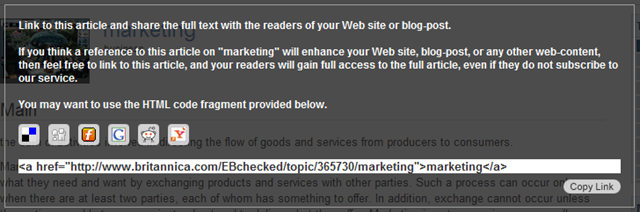
Det som föranleder det här inlägget är flera saker. Bakgrunder är att Encyclopaedia Brittanica (felstavat här med flit) nyligen lanserat Britannica WebShare (Britannicanet.com) med två tydliga syften. "1: Give free Britannica accounts to bloggers and other web publishers so they can use the site in their research, cite Britannica articles and provide selective access to Britannica through links in their posts to Britannica articles and widgets. 2: Provide readers of these articles with access to Britannica articles without needing an account at all."
Ni som varit med på något av mina gig dom senaste två åren vet att en av mina trådar handlar om Wikipedia. I början, men inte ofta numera, dök det ibland upp en konversation om kvalitén i Wikipedia versus den svenska Nationalencyclopedien och Encyclopaedia Brittanica. På ytan kan vi se hur Britannica.com hottat upp sig en del, och bland annat levererar en edition för iPhone.
NE.se å andra sidan känns inte lika cool. Även om båda webbplatserna i mitt tycke är snyggare än Wikipedia, så leder fortfarande den senare när det gäller social funktionalitet. Framförallt med avseende på sättet att kunskapa genom konversation. Jag brukar klaga på att även om NE erbjuder "kommentera artikeln" så händer det absolut ingenting dom gånger jag försökt tycka till. Därför känns det surt att inte kunna gära något när NE JUNIOR beskriver "Marknadsföring":
reklam och många andra saker som företag gör för att få människor och andra företag att köpa deras varor och tjänster eller satsa pengar i företaget
Jag är ju inte ensam om att i första hand se marknadsföring som (min omtolkning till juniortugg)
ett sätt att ta reda på hur folk är och vad dom vill ha så att företag och organisationer på olika sätt kan göra nytta för sina kunder och användare. Konsumentvetenskap, marknadsundersökningar, reklam och andra verktyg är bra att ha när man marknadsför.
Dom som registrerat sig på WebShare kan sen använda specialsajten Britannica Online. Som vi kan se har den webbplatsen ett Webb 2.0-snitt. Vi har coverflow-inspererad navigering, videos, widgets/gadgets och funktioner för att dela med sig av innehållet i andra sociala medier, mm.
Det andra är att lanseringen av WebShare bland annat skett genom en social medie-strategi. En aspekt är naturligtvis just det att man kan dela med sig av artiklarna. Men det är mer än så, vilket beskrivs av PR-konsulten och sociala mediegurun Shel Holtz som hjälpt till. Han skriver bland annat:
The primary targets of our outreach effort (Neville Hobson is helping me out with this) have been (and will continue to be) education-focused bloggers, library bloggers, and journalists. Many who live and work in these disciplines are restricted, right or wrong, from citing Wikipedia articles in their work, which led us to believe they would constitute a very interested group.
[Update 2008-06-03: I believe that the problems I had was actually caused by spam attacks and not related to Woopra. Hence today I reinstalled the woopra plug-in to weconverse and have begun using the tools]
[WARNING UPDATE 2008-04-25 14:50 GMT+1: The kind of application described in this post requires the installation of software provided by other parties, in this case from woopra.com. A couple of hours ago I experienced some strange behavior on the weconverse.com site. The effects (file date modifications, som extra files added to the server, etc) reminds of a known spam attack, which I thought applied to other versions of WordPress. Even though I have no reason to believe that woopra is the causee, I have temporarily removed it from my server because the strange things happened after I installed woopra.]
We are who we are and who we are need explanations (guess where I got that from :-).
Last night I digged into my dile (digital pile) of podcasts, blogs, news sources, and more. In episode 40 of the WordPress podcast I heard about Woopra, which looks like an extremely interesting service. The people behind Woopra (Elie Khoury, Jad Younan, John Pozadzides and the team of iFusion Labs) says that Woopra is:
the world’s most comprehensive, information rich, easy to use, real-time Web tracking and analysis application. And it’s free!
My impression so far is that Woopra is like Google Analytics (and similar services), but offers a number of additional features. In particular: real time (data analysis, live tracking and web stats), more comprehensive (richer UI, site type focus), and most of all – built in capabilities for conversations between managers and visitors of the site (Click-to-Chat). Woopra is managed through an application installed on the site owners personal computer (Windows, MacOS, Linux). For example, I can tag some visitors to weconverse.com and whenever they return to the site my desktop application will notify me.
Woopra seems to be geared more towards personal/SME’s than corporate web sites. It was Launched April 9 and is still in beta. Up until today the services was by invitation only. I have signed up, installed the tools, but still wait for an approval to go ahead with weconverse.com.
Meanwhile, you can take a look at some reviews. The 10 minute video below from Johny.org is unfortunately without narration, but gives a pretty good idea of what we can expect.
Last week, when I was in New York with a group of customers on a learning trip, the Thursday FiR 337 discussed the greenwashing issue. That is, misleading consumers regarding the environmental practices. A practice that perhaps will become impossible thanks to social media. Compare the Wal-Mart kerfuffle two years ago, when the retailer’s blogger outreach "Working families" was revealed as a fake created by Wal-Mart and their PR agency.
When I heard about that, my initial reaction was that it might very well be a greenwashing case. Saatchi just wants to appear "green", and the same goes for Wal-Mart. So, as a way to clear my mind I decided to to some further research. And now it seems to me that Saatchi S rather wants to create BLUE. When green is about enviromentalism, BLUE is about putting people at the center. More specifically, people as consumers. Most likely social media will be an important factor in this process, albeit not as a core strategy (yet :-).
A key person in the story is Adam Werbach. In 1996 he became the youngest national (US) president of the Sierra Club. In 1998 he started Act Now Productions, and in 2006 he accepted a request from senior leaders at Wal-Mart to help them with their sustainability efforts. The same year Adam was also elected as a member of the international board of Greenpeace. Of course his decision to work for Wal-Mart was heavily criticized. As he examplifies in his speech to the Commonwealth club earlier this month (pdf, audio):
A widely circulated piece critiquing my decision to work with Wal-Mart was entitled “The Death of Integrity.” Another one, published just this week, has a more visceral title: “Adam Werbach makes me puke.” A blogger named Cliff Schector wrote a piece called, “Adam Werbach: Wal-Mart’s New Fraud Salesman.” “What Werbach needs to realize is that Wal-Mart is beyond improvement and yes, beyond redemption. Those who really are forward-thinking need to stop working with this man, certainly stop paying him and I would daresay, if you really believe in what you say you do, stop returning his phone calls. He has chosen to sell out. It doesn’t mean we all have to join him in Wonderland."
Tonight I invite you to join me in Wonderland.
In short, Adam’s creative idea was to motivate every Wal-Mart associate (1.3M in the US, almost 2M world wide) into a Personal Sustainability Practice (PSP). Thus allowing individuals to decide what sustainability means and what she or he could do about it. I suggest that you (pro)consume Adam’s Commonwealth speech (pdf, audio), because it explains in great details the situation, thoughts, lessons, surprises, and effects. Some of the results, regarding the Wal-Mart associates, include that they:
lost more than 60 tons of weight;
walked/biked/swam more than 380,000 miles
created over 16,000 “Idea Groups” to support one another around Personal Sustainability; and
quit or reduced smoking, with more than 10,000 Associates to date making a healthier change!
recycled more than 5 million pounds of aluminum, plastic, and paper
Kate also added a note about one of the interesting side effects. One associate suggested that the lamps in the stores’ Coke vending machines should be switched off at nights. I do not remember how much energy that saved, but it was a huge number.
Another important aspect here is the "consumer approach", where of course Saatchi & Saatchi comes in handy. Kevin Roberts, CEO Worldwide of Saatchi & Saatchi, said in their news release:
Social change is part of Saatchi & Saatchi’s DNA. We are committed to world-changing ideas, to creating Lovemarks, to understanding the shopper, and to helping build a sustainable future across all dimensions: economic, environmental, social and cultural.
One might look at that as greenwashing. But personally I have for a long time argued that marketers, here an agency with expertise in (post) modern consumer behavior, understand people better than most legislators, educators, environmentalists, etc. Furthermore, it is my impression that it is exactly that kind of expertice Adam Warbach wants to exploit for sustainability purposes. Sam Walton (founder of Wal-Mart) have said "The secret of successful retailing is to give your customers what they want". My intepretation is that Adam’s approach is to make consumers really want sustainability. This could perhaps be compared with the different strategy (I believe) taken by The Natural Step, who employ organizational and educational approaches.
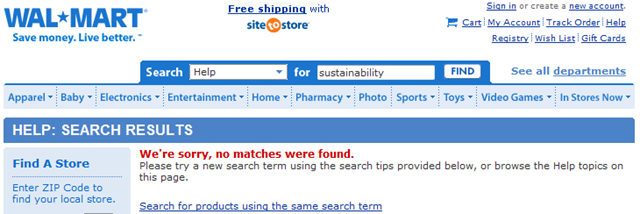
Future will tell, and I truly hope we are right. Still, I am not totally convinced. I could not find a word about sustainability in the "help/about section" of the Wal-Mart web site, but a search for "sustainability" linked to Wal-Mart Save Money, Live Better.
In any case, it sounds great to be BLUE. And I bet, given the marketing machines involved here, that we will see a lot of BLUE videos, plug-ins, widgets, gadgets, apps, and more. Or, are they already out there?
(by the way BLUE and PSP are not very smart brand names from a Internet search perspective, and I personally do not like commercial appropriation of core words in our languages, i.e, the name of a color or a digit).
 I lördags fick jag ett SMS från en kund. Texten löd "Vad betyder FiR"? Bakgrunden är att han några timmar tidigare skickat mig ett mejl med rubriken "Ett ord" och texten var bara länken: http://edition.cnn.com/2008/TECH/04/25/twitter.buck/index.html?eref=rss_topstories. Jag kollade snabbt och det visade sig handla om händelsen där studenten James Karl Buck snabbt frigavs från ett Egyptiskt fängelse med hjälp av sina Twitter-vänner. Till saken hör att jag och kunden i fråga tidigare diskuterat om vi skulla använda Twitter i ett gemensamt projekt. Jag svarade direkt på hans mejl med det korta budskapet "Ett annat ord: FiR". Det fick kunden att grubbla, googla, ge upp – och fråga mig. (I Transparensens tecken får han själv säga vem han är om han vill).







 Inlägg (RSS)